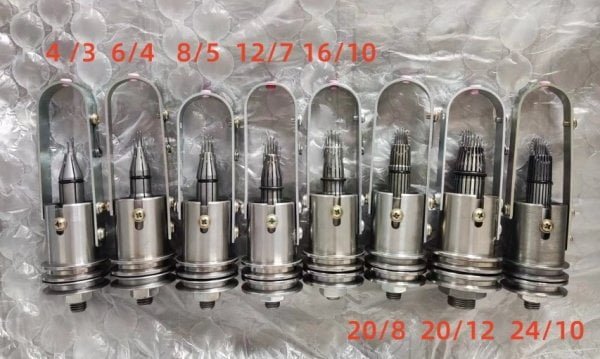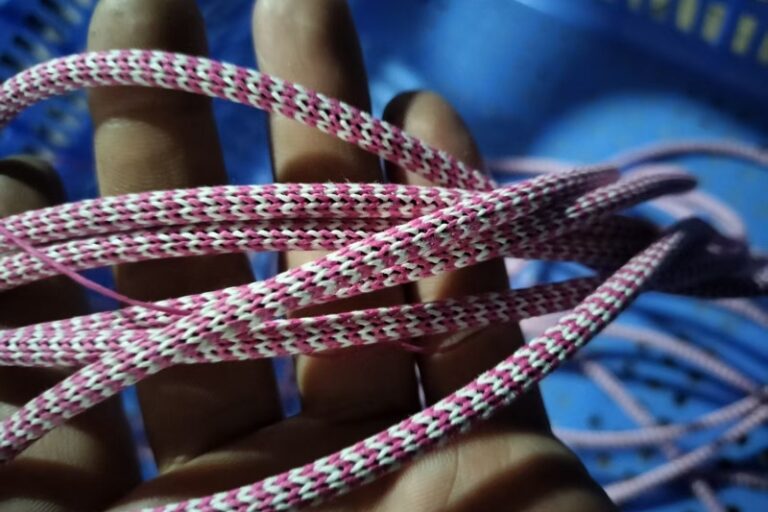

During production, if you find that the density or dimensions of the finished product deviate slightly from your expectations, you can make precise adjustments in the following two main ways. We recommend adjusting only one variable at a time, so that you can clearly judge the effect of each adjustment.
Method 1: Fine-Tuning by Adjusting the Cam Clearance in the Machine Head
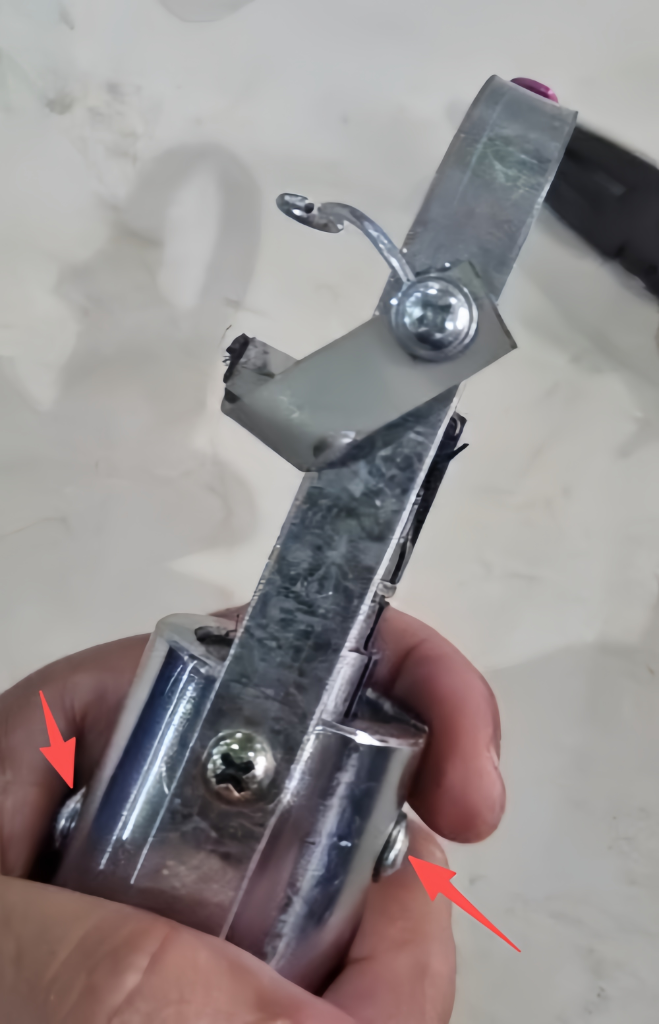
This method is mainly used for fine, small-range adjustment of the finished density and dimensions.
1. Working principle:
On the main body of the machine head there are usually two fixing screws (one at the front and one at the back). These screws not only hold the assembly in place, they also control the relative position of the internal cams. By turning the screws slightly, you change the clearance between the two cams, and this clearance directly determines the stroke (the “range of movement”) of the needles during operation.
Smaller clearance -> shorter needle stroke -> loops tightened -> higher rope density, firmer and smaller dimensions.
Larger clearance -> longer needle stroke -> loops loosened -> lower rope density, softer and larger dimensions.
2. Operating steps:
Locate the two adjustment screws on the front and back of the machine head body.
Using a suitable tool, turn the screws slightly (usually a quarter of a turn already has an effect).
Important: After adjusting, always re-tighten the screws.
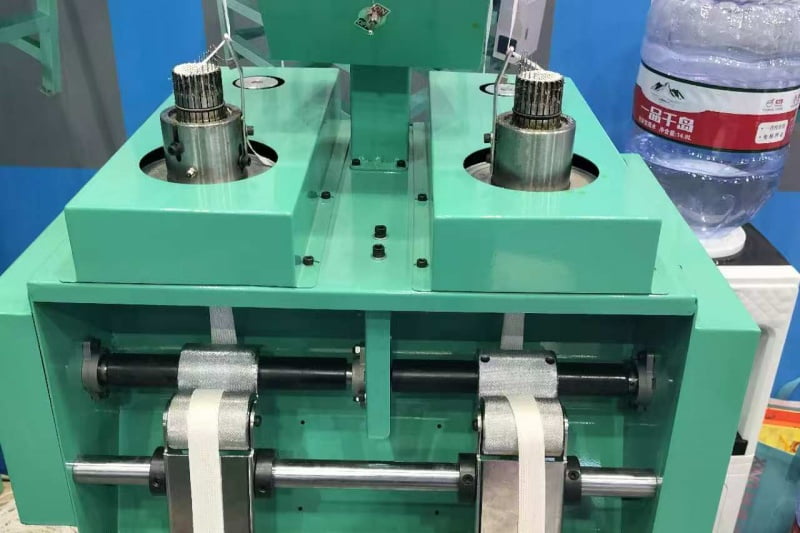
Method 2: Adjusting the Rope Take-Off Speed
This is the most direct and most commonly used way to adjust density and dimensions, and it covers a wider adjustment range.
1. Working principle:
The machine’s pulling wheel (also called the haul-off or traction wheel) pulls the braided rope steadily out of the machine head. The speed of the pulling wheel directly determines how much yarn is fed into the braid per unit of time.
Faster take-off -> the rope is pulled away from the braiding zone quickly -> less yarn in each loop -> lower rope density and smaller dimensions.
Slower take-off -> the rope stays longer in the braiding zone -> each loop takes in more yarn -> higher rope density and larger dimensions.
2. Operating steps:
On the machine’s control panel or drive system, find the device that adjusts the pulling-wheel speed (it may be an inverter knob, a change gear, or a touchscreen setting).
Following the principle of “faster means looser, slower means denser,” adjust the pulling-wheel speed.
After running a short length, cut off a sample and compare it with your target sample until you get a satisfactory result.
Summary and Recommendations
When you need to adjust density and dimensions, we recommend using Method 2 (adjusting the rope take-off speed) first, because it is more intuitive and gives a more noticeable effect. Only when the take-off speed can no longer meet your fine-tuning needs, use Method 1 (adjusting the cam clearance) as a supplement for more precise correction.
If you have any other questions regarding the chrochet machine head, please feel free to contact our team.