
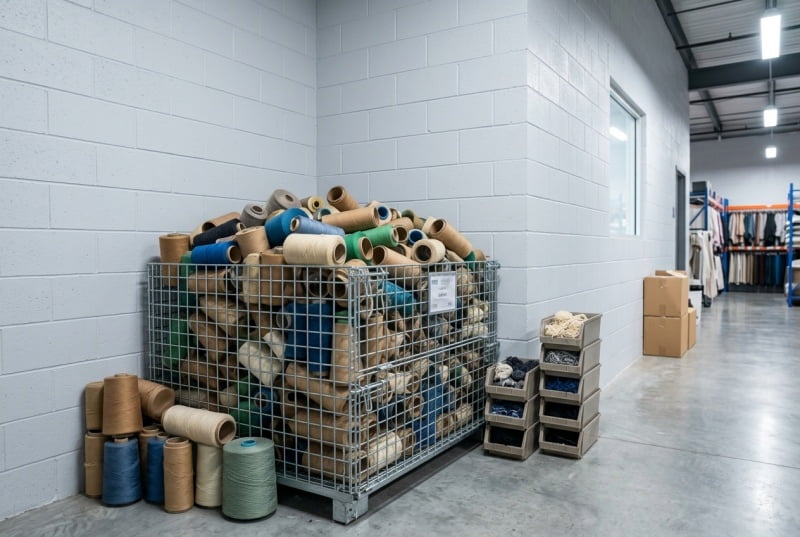
We often hear from clients who are frustrated with manually clearing residual yarn from bobbins, asking if there’s a more efficient way. And it’s true—in every high-speed textile mill, there’s a process that silently drains time and money: the small but vast amount of “tail yarn” left on bobbins. Dealing with this last bit of yarn has become a major headache for more and more managers.
1. The Traditional Method: A Hidden Financial Burden
For years, clearing tail yarn has been a manual job. A pair of scissors and a pair of hands formed the most basic production line. However, the drawbacks of this method are obvious:
A.High Labor Costs:
With labor costs rising year after year, hiring a large number of workers for simple, repetitive cutting tasks is a significant expense.
B.Low Efficiency:
Manual work is slow and time-consuming, falling far behind the pace of a modern textile workshop.
C.Severe Bobbin Damage:
During cutting, tools can easily scratch or damage the bobbins. Whether it’s expensive aluminum bobbins or common conical paper and plastic tubes, any damage affects their reusability and increases equipment costs.
D.Incredible Waste:
To avoid the hassle, some companies choose to discard bobbins with tail yarn still on them. This may seem “easy,” but it leads to staggering resource waste and goes against the principles of green, sustainable manufacturing.
2. A Technological Revolution: Hot-Air Jet Technology
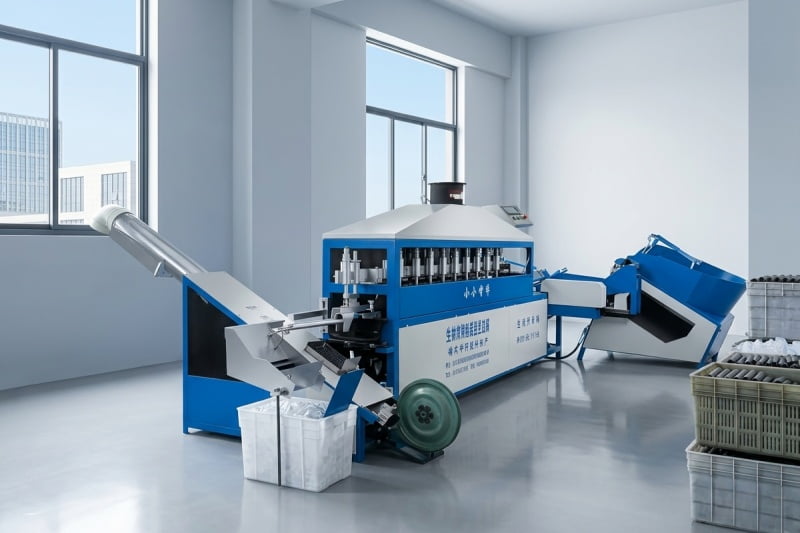
To address these common industry pain points, a new generation of multi-functional yarn stripping machines has arrived. It completely overturns traditional methods, offering businesses a solution that saves labor and is both efficient and clean.
The core of this innovation is its hot-air jet technology. This technology uses a precisely controlled, high-temperature stream of air aimed at the tail yarn. The yarn melts and breaks instantly upon contact with the hot air. The entire process is clean, swift, and completely contact-free with the bobbin, fundamentally preventing any scratches, wear, or other physical damage.
The melted yarn waste is then guided into a dedicated collection box. This automated process not only frees workers from tedious, repetitive labor but also ensures a clean and orderly workshop environment.
3.One Machine, Multiple Benefits: Boosting Your Competitive Edge
Introducing a new yarn stripping machine brings more than just an increase in efficiency; it offers a comprehensive upgrade in benefits for textile companies:
A.Versatility:
Our carefully designed models can meet the needs of various bobbin materials. Whether you use aluminum, conical, or paper/plastic tubes, there is a perfect solution for you.
B.Cost Reduction & Efficiency Boost:
The machine’s automated operation significantly reduces the reliance on manual labor, directly lowering costs. Its speed, far surpassing manual work, shortens processing time and accelerates bobbin turnover.
C.Eco-Friendly & Economical:
By protecting bobbins and extending their lifespan, the machine reduces unnecessary waste and purchasing expenses. The automatic collection of waste yarn also makes it easier to recycle materials.
D.Optimized Management:
Replacing manual cutting with a machine makes the production process more standardized and easier to manage, enhancing the workshop’s automation level and the company’s image.
In today’s increasingly competitive textile industry, optimizing every production link can be the key to success. Saying goodbye to inefficient and damaging hand tools and choosing a smart yarn stripping machine is a wise investment for any forward-thinking manager looking to reduce costs, increase efficiency, and advance toward smart manufacturing.
A small issue like tail yarn can have a big impact on your production costs and efficiency.
So, in your factory: What material are the bobbins you use most often (aluminum, paper/plastic, or another type)? And what method are you currently using to handle the tail yarn?
Feel free to leave a comment below to share your experiences and insights!
If you are interested in a yarn stripping machine, please contact our team.