
Inside modern vehicles like cars, airplanes, and high-speed trains, there is a complex network of wires, much like a “neural network,” whose stability and safety are critical. So, how can we provide strong, reliable protection for these delicate and vital wire harnesses? The answer lies in specialized braiding machines.
Two Methods of Protection: Expandable Sleeving vs. A Tightly Braided Layer
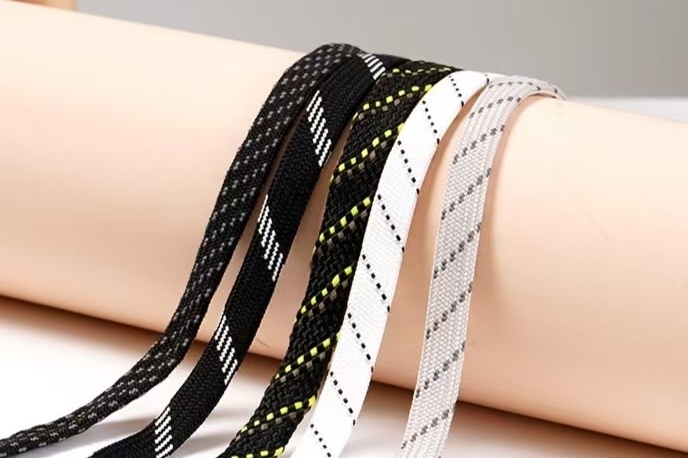
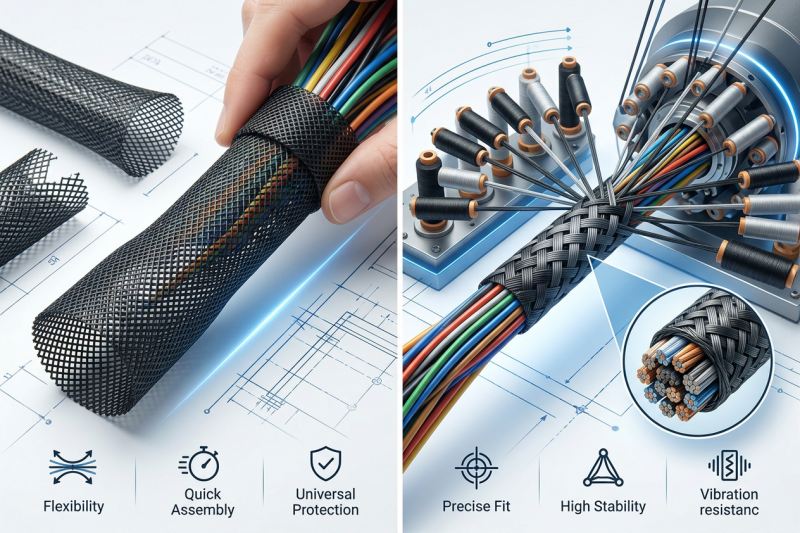
There are typically two common ways to protect wiring. The first is by using pre-made expandable braided sleeving. This is a flexible tube woven from materials like eco-friendly PET, which can be slipped over cables like a sleeve. It offers excellent abrasion resistance, flame retardancy, heat dissipation, and expandability, serving to protect and tidy the wiring.
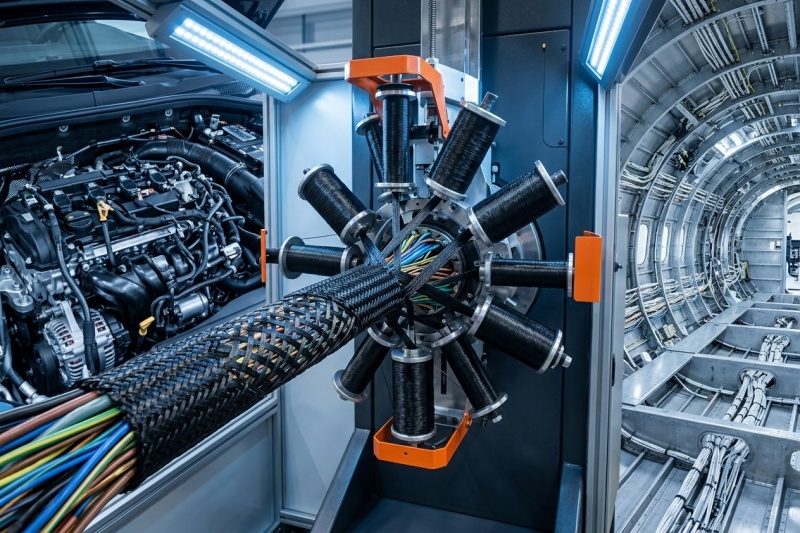
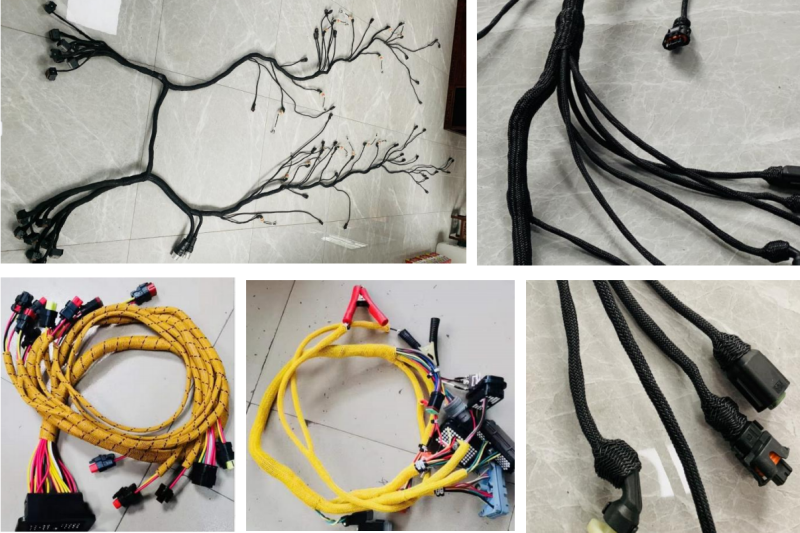
The second, more advanced and secure method, is to use a wire harness braiding machine to braid protective materials directly and tightly onto the exterior of the wire harness. This isn’t just slipping on a tube; it’s like knitting a sweater, where high-performance fibers like PET, nylon, or aramid are wound and locked layer by layer around the harness. This creates a perfectly fitted, seamlessly wrapped, custom “suit of armor.” This method offers tighter and more reliable protection, making it ideal for industrial applications with strict requirements for anti-vibration, abrasion resistance, and dimensional accuracy.
Why Do Automotive and Aviation Industries Prefer Direct Braiding?
Inside a car’s engine bay or an aircraft’s fuselage, wire harnesses face harsh conditions like high temperatures, oil, constant vibration, and tight spaces. The tightly braided layer created by a braiding machine can:
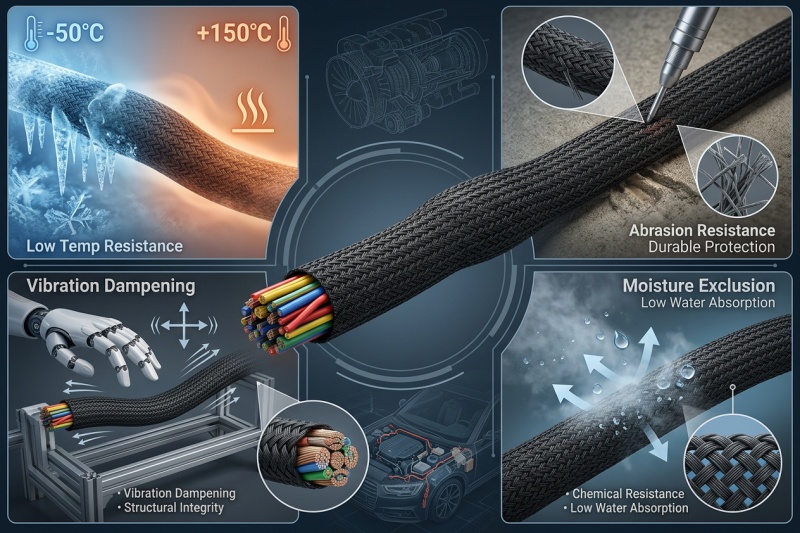
Provide a Perfect Fit: It seamlessly covers irregularly shaped harnesses, preventing shifting and friction caused by vibration.
Deliver Excellent Performance: The braiding materials offer high and low-temperature resistance (-50°C to +150°C), a high flame-retardant rating (VW-1), and low water absorption (≤0.5%), ensuring top-tier safety for the wiring.
Enhance the Process: Automated braiding ensures product consistency and high precision, meeting the strict standards of high-end manufacturing.
Specialized Equipment for Diverse Industrial Needs
To accommodate everything from thin sensor wires to thick main harnesses, braiding machines offer flexible solutions.
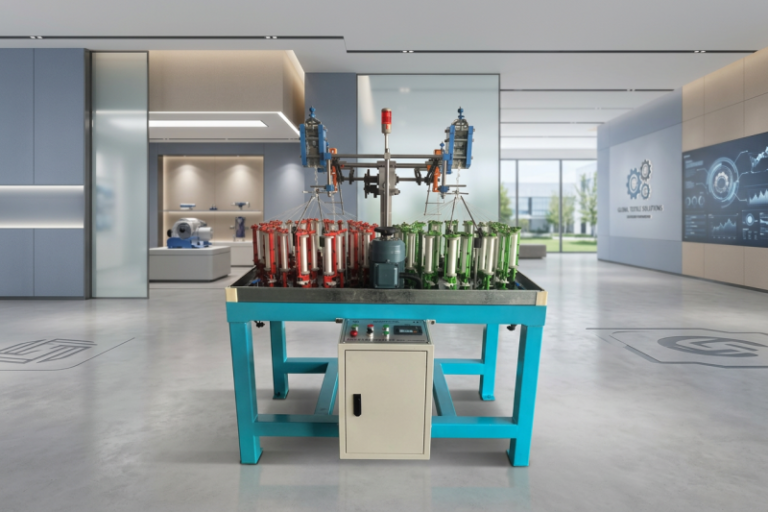
A Variety of Sizes: While machines for expandable sleeving have many specifications, models for wire harness braiding typically come in four main sizes: 16, 24, 32, and 48-carrier.
Flexible Configurations: Machines range from basic models for short harnesses, to upgraded versions with traction systems for long harnesses, to high-end models with servo motors and PLC touch screens for automated, programmable braiding, meeting various precision and efficiency needs.
In summary, by creating a tightly-fitted “suit of armor” directly on the cables, wire harness braiding machines provide unparalleled protection for the core wiring in advanced equipment like cars and airplanes. It is a key technology for ensuring these machines operate safely and reliably.
If you are interested in different models of braiding machines or would like to know more about specific technical parameters, please feel free to contact us.