

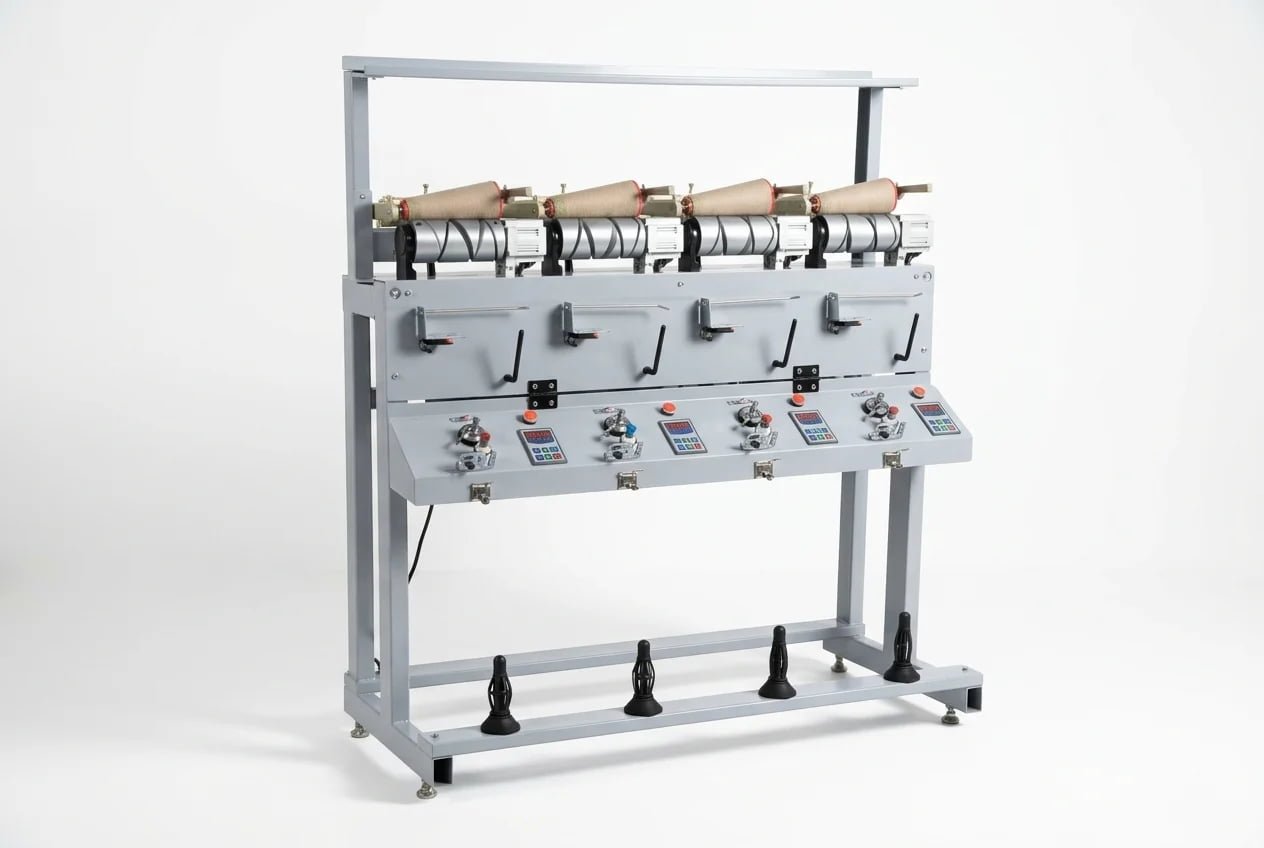
Have you ever struggled to untangle a messy ball of yarn or a pair of knotted headphones? In textile production, yarn can face similar problems. The machine designed to solve them is the yarn rewinding machine.
Also known as an automatic winder or rewinding machine, it takes yarn from small or irregular packages and rewinds it into neat, uniform, high-quality packages. This prepares the yarn for later processes such as weaving, knitting, and dyeing.
1. Why Does Yarn Need to Be Wound?
You may wonder why yarn cannot be used directly after spinning. Winding is essential for three main reasons.
A.Turning Small Cops into Uniform Cones
Yarn from a spinning frame is usually wound onto small tubes or bobbins called cops. These packages are often small, loosely wound, and irregular in shape. If they were used directly on high-speed textile machines, the yarn could break or become stuck frequently, reducing production efficiency.
A winding machine transfers yarn from these cops onto large, tidy, cone-shaped packages called cones. Yarn can unwind smoothly from a cone, allowing weaving and knitting machines to operate at higher speeds with fewer interruptions.
B.Inspecting and Improving Yarn Quality
Freshly spun yarn may contain defects such as thick or thin places, slubs, neps, and impurities. If these faults remain in the yarn, they can create visible defects in the finished fabric.
Modern winding machines are equipped with electronic yarn clearers. As the yarn passes through the clearer at high speed, the system detects unacceptable defects and automatically cuts out the faulty section.
The machine then joins the two yarn ends using air-splicing technology. Unlike traditional knots, an air splice is small, smooth, and strong, making it almost invisible in the final fabric. This process ensures that only high-quality yarn continues to the next production stage.
C.Preparing Yarn for Its Next Process
Different textile processes require different yarn packages. For package dyeing, for example, yarn must be wound into a soft and porous package so that dye can flow evenly through every layer.
A rewinding machine can accurately control yarn tension and package density to produce a soft cone or dye package. After dyeing and drying, the yarn can be rewound onto a firmer cone for weaving, knitting, or other uses.
2. Main Functions of a Yarn Winding Machine
A yarn winding machine performs several important tasks:
- Package forming: It converts small, irregular cops into large, stable, and uniform cones that are easier to store, transport, and use.
- Quality inspection: It automatically detects and removes yarn defects, helping improve the quality of the finished textile product.
- Air splicing: It joins broken or cut yarn ends without traditional knots, producing smooth and reliable connections.
- Length measurement: The machine can wind a preset length of yarn onto each cone, making package size more consistent and simplifying inventory management.
- Tension and density control: It adjusts winding conditions according to the yarn type and its next production process.
- Special treatments: Some machines can apply wax to yarn, improving smoothness and reducing friction during knitting.
With these functions, the winding machine acts as an efficient “yarn manager,” combining package formation, quality control, and process preparation in one operation.
3. Where Are Yarn Winding Machines Used?
Yarn winding machines are widely used throughout the textile industry.
Spinning Mills
Spinning mills are the primary users of automatic winders. After spinning, yarn passes through the winding process for inspection, defect removal, and packaging before being sold or transferred to another production department.
Weaving and Knitting Mills
Some weaving and knitting factories use winding machines to transfer purchased yarn onto packages better suited to their equipment. Properly wound cones help machines run smoothly and reduce yarn breaks and downtime.
Dyeing and Finishing Plants
Before package dyeing, yarn is wound into soft packages that allow dye liquor to penetrate evenly. After dyeing and drying, it is often rewound into firm cones for easier handling and further processing.
Sewing Thread Manufacturing
Sewing thread is also processed using similar winding equipment. Thread can be transferred from large industrial cones onto smaller spools suitable for factories, shops, or household use.
4. Conclusion
Although a yarn winding machine does not produce fabric directly, it is an essential part of the textile production chain. It improves yarn quality, removes defects, creates suitable packages, and prepares yarn for weaving, knitting, dyeing, and other processes.
By ensuring that yarn is clean, uniform, and easy to unwind, the winding machine helps downstream equipment operate efficiently and contributes to better-quality finished textiles. It is truly an indispensable “yarn butler” working behind the scenes.
If you have any questions about yarn winding or rewinding machines, please feel free to contact us.